-
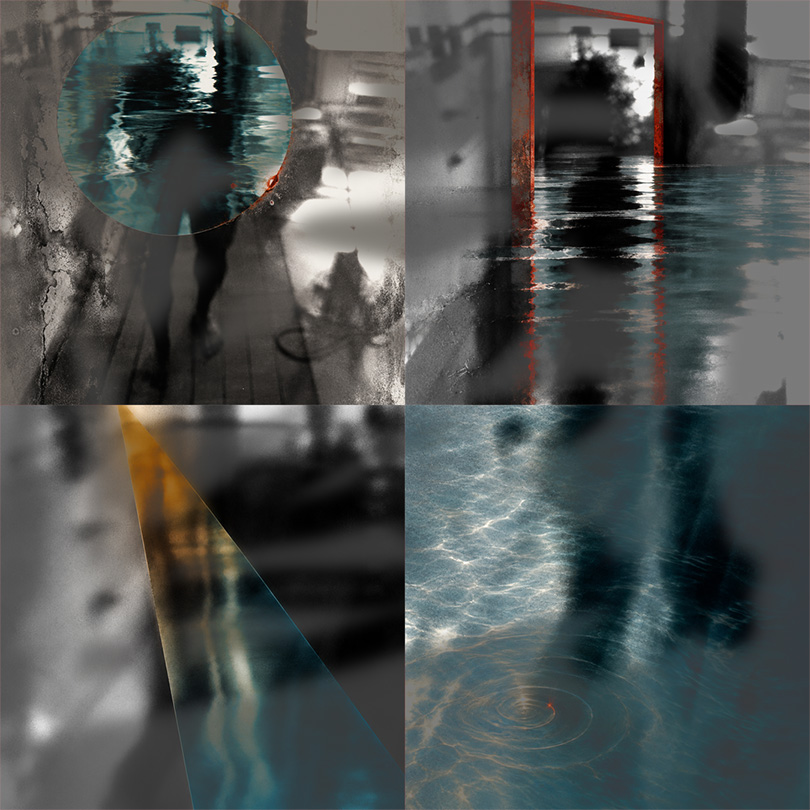
Du sollst zum Aug der Fremden sagen: Sei das Wasser.
Read more: Du sollst zum Aug der Fremden sagen: Sei das Wasser. -
Manifesto of Total Autocracy – 12908245
Read more: Manifesto of Total Autocracy – 12908245Hommage à George Orwell I do not threaten. Threats are crude and unnecessary. I inform. I remind. I ensure that everyone understands the same simple fact. Nothing disappears. Every action is visible, whether or not it believes itself hidden. Every word survives its speaker. Every silence is interpreted. Time does not erase. Time preserves. You…
-
Verticals, Street, Deconstruction
Read more: Verticals, Street, DeconstructionThe street is not continuous. It is cut. Verticals are not objects. They are decisions already made by space. Photography does not record the street. It submits to its separations. Every vertical divides time before it divides space. What appears between two uprights is already delayed. The camera does not see freely. It obeys an…
-
Deconstruction as Immanent Temporality in Photography
Read more: Deconstruction as Immanent Temporality in PhotographyYou are right. If deconstruction is named correctly, temporality cannot appear as an adjective, a layer, or a methodological add-on. It is constitutive. Below is a refined approach in which time is not applied to deconstruction, but enacted by it. Deconstruction is formulated as immanent temporal reversal followed by forward reconstruction. Not a process in…
-
The Time Through Time
Read more: The Time Through TimeDeconstruction of camera syntax is fundamentally temporal. Photography does not merely record time. It stages différance through technical choice. Shutter speed, f-stop, and ISO form a closed syntactic system. Deconstruction does not break this system. It operates as temporal destructuralisation, acting in time and through time. Shutter speed. différance made visibleShutter speed appears to capture…
-
ID
Read more: IDI come from manual work. My great-grandparent was a weaver, working with rhythm, repetition and patience. My grandfather was a blacksmith, shaping force into form through heat and resistance. Another line comes from peasant life, tied to land, seasons and survival. None of these were symbolic roles. They were ways of inhabiting the world through…
-
That It Is
Read more: That It IsYour individual identity is not a fixed core that can be named once and defended forever. It is a continuous practice of positioning. You are shaped by inherited lines. Names, trades, migrations, languages, dissidence. But these are not essences. They are vectors. They point, they do not conclude. What distinguishes your identity is not origin…
-
Spatial Division
Read more: Spatial DivisionCore ideaThe street is composed of divided spaces. These divisions are not abstract. They are material, architectural, and social. Vertical lines function as separators. Lamp posts, façades, pillars, door frames, traffic signs, window edges, shadows. Each vertical element interrupts continuity and produces a boundary. Conceptual logicVertical lines establish separation rather than flow. They split bodies,…
-
Vienna as Transit
Read more: Vienna as TransitA field protocol of unsettled presence This project approaches Vienna not as a cultural centre, but as a condition of passage. Vienna appears here as a city one inhabits without arriving. A place structured by corridors, edges, and intervals rather than destinations. The work emerges from a lineage in which names, languages, and places do…
-
Poems Teach Us To See
Read more: Poems Teach Us To SeePoems teach us to see because they slow perception down. They suspend the rush toward meaning and hold attention on relations, rhythms, pauses, and omissions. A poem does not describe the world in order to explain it. It arranges language so that seeing becomes an event. Words are placed next to each other the way…